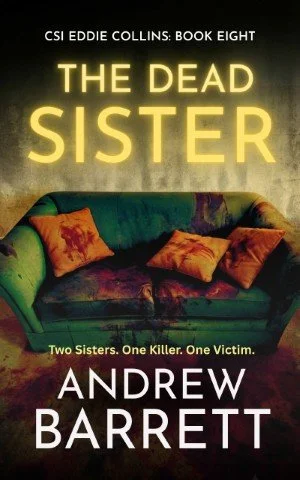
The Story Behind The Dead Sister
I recently discovered something.
I was never a plotter kind of writer, I was always a panster. That is a writer who writes by the seat of their pants.
But I’ve learned a newer moniker, a posher version if you will. I am a discovery writer, dammit!
I am a discovery writer.
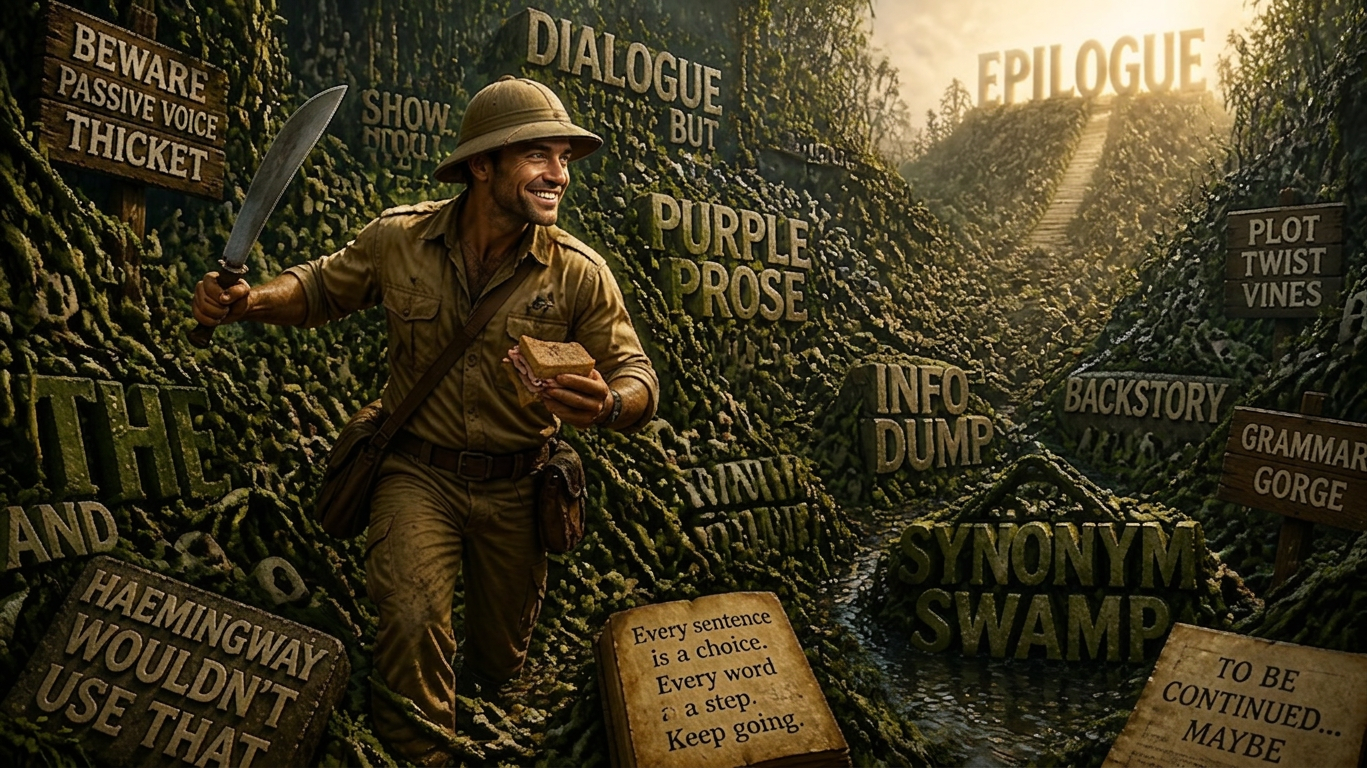
I like that. It has a pioneering quality to it. Can you see me in my pith helmet, machete in one hand, ham sandwich in the other, fighting my way through the jungle of words, discovering the story en route, and only stopping when I reach the epilogue. Yes, I do like that image.
Anyway, this is the technical method I employed when writing The Dead Sister.
The first scene I wrote for the book I called Eddie 8 for the better part of eight or nine months, featured our dear hero in a courtroom. In it he would detail the findings of a scene he attended a year previously where a female was discovered dead in a hidden room. I attended such a scene maybe fifteen years ago myself – no body, just the hidden room. And I held onto it ever since. In Eddie 8, the story would unfold after the near-suicide of one of the main characters. He was pissed off at being swindled out of his inheritance by his brothers, and planned a way to make them pay, mwahahaha.
It’s funny how things turn and re-emerge as a different animal the more you prod and poke at it. And that’s what happened with this story. This thing went through lots of iterations before I settled on the one you see before you. As I wrapped up The Dead Sister, I realised the courtroom saga had no place in this story and discarded it. It later became the basis for a novella I wrote, and you can read The Story of The Cracked Wall here.
I decided not to write about brothers fighting over an inheritance, but I elected to keep the attempted suicide, not because of an inheritance, but rather because of a female. As I scribble this piece, I recall writing the scene where our poor fellow wakes up, realising his attempt to end it all had failed. And the strange thing is I forgot to include that scene in the book – d’oh! Yes, that’s true, by the way. Of course the book gets by without it, but I do remember liking that scene – he’d been unconscious for three whole days and woke up like a reborn human. Never mind, it’s not important now, ahem.
So the story morphed into one not about brothers, but about sisters and the sons they had, about their families, their shared parents, their values, and their memories, and how those memories shaped the events to come decades later. Families are curious creatures, each limb made up of a human being, and so each limb is also a curious creature; it’s no wonder that some families are downright weird, is it? And so it is in The Dead Sister – all about a curious family and how their differences are finally resolved. So to speak.
I realise the further I get into this The Story Behind, the more vague I seem to get. There’s good reason for it, really. Although if you’ve read any of the other The Story Behind series, you’ll realise there are necessarily some spoilers in them, I don’t really want to give away too much in this one. Why? Well, it’s a fragile story, a delicate one where I rely on you not knowing certain things in order to make the whole thing work. Of course I can tell you that Eddie gets mighty pissed off with himself, with the Major Crime Unit as a whole, and with some staff who work there, you probably won’t be entirely surprised. If I tell you that the word ‘vagina’ makes an entrance, and we can almost hear an Alexa break wind, you might be a little bit shocked.
But, and this is a big but, if I tell you that Eddie’s past pops in for a catchup and... wait, no, no, no, I can’t possibly divulge any more. Forgive me, but I simply can’t.
This story was an absolute twat to write. Well, up until the 50k word mark. And that’s true of a lot of the books I’ve written. That’s the trouble, you see, when you’re a discovery writer – you have absolutely no idea where things are going. And I didn’t. And it was incredibly painful, not knowing what was happening, not being aware of a direction to follow, always wondering if you’re doing the right thing, or if you’re damaging the fabric of the story by writing this next chapter. It’s scary – take my word for it; and it’s an anxious time.
After the 50k word mark, things didn’t get much easier until the ending came into view somewhere around the 70k word mark, and then it was like I’d remembered I’d been driving with the parking brake still applied. Once I removed it, the story picked up speed, gathered a new impetus and began moving of its own accord. And then the towards the arse end, the magic began to happen; the list of scenes to write appeared on its own, and writing was easy again, joyful, even. And when I reached the end, I was able to go back and add the flourishes that delight me so. Those are the little clues I leave for you, the little embellishments that make you nod when you see the result a further hundred pages into the story – the aha! moments.
I remember fumbling around in the darkness trying to get a handle on this story. This is an excerpt from one of those clumsy fumbles:
Rita is married to Jack. Rita has a sister, Denise, and a brother, Kevin.
Micky breaks into Rita’s house while Jack is out.
Micky tries to rob the house, but he ends up fighting with and killing Rita.
Jack comes home and finds Rita dead, the house ransacked. He calls the police.
Jack calls Denise.
The police arrive, and there is a crowd present. They all yell Micky is to blame, it’s his MO.
Jack is taken into the station for questioning, maybe arrested cos he’s covered in blood.
Denise let’s Kevin know and tells him who they think is responsible (Micky). Denise finds Micky and kills him. She goes back home.
The next day, Jack is released. He cannot go into his home because it is an active scene.
Jack asks a neighbour where he can find Micky. He goes to find Micky and discovers he is dead.
It’s not easy to follow, is it? I apologise for that, but this is part of the process I have to go through to nail things down. Don’t forget that the initial scene had already been written, and I was trying to search for the rest of the story. This excerpt is the third or fourth version, and there are another couple to go before I stumble upon something that feels right.
To clarify – this is still being a discovery writer. Those who plan their novels do so in much greater detail than this. I tried it once; did I tell you? It killed the impetus, it murdered the surprises I found along the way, and it turned the whole process dry and unentertaining. Never again.
I also had (I was going to say ‘fun’ then, but it really wasn’t) a hard time selecting the names for this tale. I get very attached to the characters in a book, and if their name isn’t right, I can’t latch onto them, and I can’t see them properly. I know how wonky that sounds, but it’s just one of my foibles.
Rita is one of the main characters, and she’s the only one (except Eddie and the other regulars, of course) who kept this, her original name, throughout.
Laura became Lexi
Baxter became Harrison
Micky became Jack became Thomson became Tommy
There was a Denise – no idea what happened to her. Oh, I think she became Sheila became Marie became Carol.
To cap this off, would you like to see the blurb? Splendid - here it is:
CSI Eddie Collins deals in forensic science and sharp put-downs, not human drama. But when his predictable world descends into chaos – fuelled by friction within the Major Crime Unit and friction inside his own mind – his patience reaches breaking point.
Then, the call comes. A woman lies in a pool of blood. While the scene screams of a frantic struggle, Eddie finds forensic anomalies that point to historical abuse, hidden money, and lethal, guarded loyalties.
When the police force entry into a second home, they find another corpse – and a shocking realisation. Can Eddie cut through the deception before the killer walks free? In the dark underbelly of Yorkshire, the blood doesn't lie – but the scene certainly does.